
A Family’s Goats and Growing Hope
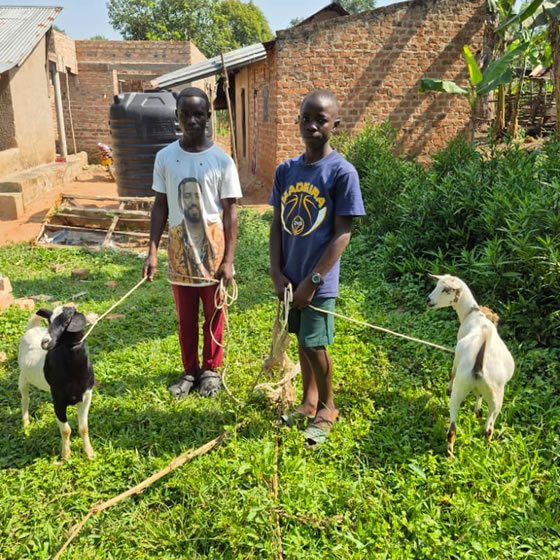
A family of seven lived each day on the edge of survival after the father abandoned the household, leaving the mother to raise five children alone with no reliable income and only a small piece of land that could not sustain them throughout the year. She survived by doing casual labor for neighbors such as planting, weeding, and harvesting, earning very little and often struggling to provide enough food for her children. Many nights the family went to bed hungry, and the uncertainty of the future weighed heavily on her as she tried to find a way to break free from the cycle of poverty. When Nalubowa Foundation UG introduced a small livestock support program for vulnerable households, this family was among the first selected to benefit. The idea was simple yet life changing: they received two female goats to raise and care for, with the opportunity to benefit from future offspring. For a family that had never owned any meaningful asset, this support represented hope and a chance to build something sustainable. They constructed a small shelter using locally available materials, learned proper animal care from the foundation team, and nurtured the goats with dedication, seeing them as the beginning of a better future. Within a year, both goats gave birth, and the family’s small herd began to grow. The sale of the first offspring helped them purchase school supplies and a uniform for one of the children who had been missing classes. Another sale allowed them to start a small home based trading activity, bringing in additional income for daily needs. Today, the goats continue to multiply, providing both financial security and renewed confidence. The family now looks toward the future with hope, believing their children will remain in school and their household will continue to grow stronger. What began as two goats has become the foundation for dignity, stability, and a new chapter filled with possibility.
Tom’s Journey Back to Childhood
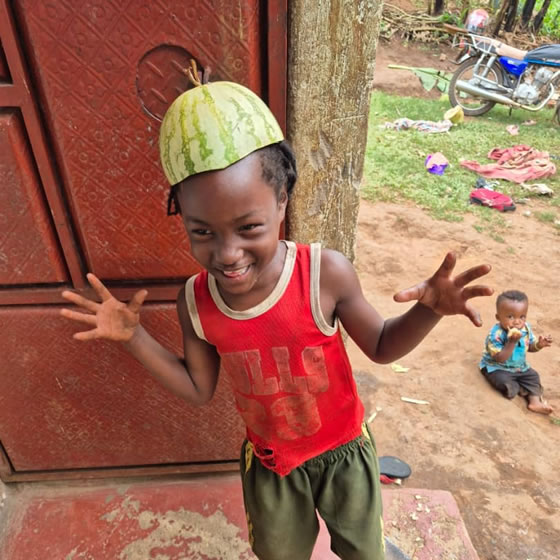
Tom was only ten years old when his mother, desperate and overwhelmed by poverty she could no longer bear, told him one morning that he must leave. There was simply no food, no money, and no way to care for him, she explained, and he would have to go and find work to survive. The little boy walked away from the only home he had ever known with nothing but the clothes on his back and a heart full of confusion and fear. For months, he moved between trading centers, doing whatever small jobs he could find carrying heavy loads for vendors, washing dishes at food stalls, sleeping wherever he could find shelter. He was just a child, but the world demanded he become a man long before his time. Our community outreach team encountered Tom during one of their routine visits to trading centers where vulnerable children often gather. They noticed him immediately a small boy with hollow cheeks and old eyes, trying to make himself useful at a tea stall in exchange for scraps of food. When our team approached him gently, Tom’s initial response was suspicion and withdrawal. He had learned that adults could not be trusted, that kindness usually came with strings attached. But our workers persisted with patience, offering food without demanding anything in return, sitting with him quietly, letting him know they saw him and cared simply because he was a child who deserved care. We brought Tom to a safe place where he could begin healing. We provided nutritious meals to restore his malnourished body, medical care to treat the ailments he had accumulated during months on the streets, and counseling to help him process the trauma of abandonment. Slowly, the guarded expression in his eyes began to soften. He started speaking more, playing with other children, even laughing at times. Most importantly, we found a sponsor who committed to supporting Tom’s education fully school fees, uniforms, supplies, and ongoing care. Today, Tom walks to school each morning with a backpack on his shoulders and a future opening before him. He is learning to read and write, making friends his own age, and discovering that he is valued not for what he can do, but simply for who he is. The little boy who was sent away to work has been given the chance to simply be a child again.
Built a Latrine for elderly

An elder, living alone in a small compound in Kiyinda meant facing challenges that grew more difficult with each passing year. He cared for himself as best he could, but one problem troubled him deeply each and every day was that he had no latrine of his own. For years, he had relied on the kindness of neighbors who allowed her to use their facilities, but as his legs grew weaker and his vision dimmed, making the walk to their compounds became increasingly difficult and sometimes dangerous. During the rainy season, he would wait anxiously for hours, hoping the rains would pause long enough for him to make the journey, and at night, he simply could not go at all. When our outreach team first visited him during a routine check on elderly community members, he welcomed us warmly into his home but hesitated when we asked about latrine situation. With visible embarrassment, he explained that he had none, and that this simple lack had become the greatest struggle of his daily existence. He showed us where she had attempted to dig a pit herself years ago, but age and failing strength had forced him to abandon the effort before completion. Our team listened quietly, then assured him that this was a problem we could help solve. Within weeks, we returned to the home with materials and workers. We constructed a proper, sturdy latrine with a door he could easily open, a seat at the right height for his aging joints, and walls that provided privacy and protection from the elements. When we showed her the finished facility, he was filled with joy. He gripped our hands and spoke words we will never forget: “Now I can sleep through the night without fear. Now I can stay in my own home with dignity. God sent you to me.” For this elderly man, this simple structure meant more than convenience it meant he could continue living independently in the home he loved, without depending on others for his most basic needs. It meant his final years would be lived with the dignity every human being deserves.
Caring for the Elderly with Dignity

See how compassionate programs help elderly individuals live with respect, comfort, and support.
Giving Every Child a Chance to Learn

Explore the impact of providing access to education for children in vulnerable communities.
Empowering Women, Transforming Communities

Discover how supporting women through education and skills training creates lasting